Materials: Honest Surfaces
Nordic design prizes surfaces that grow richer with age. When artificial varnishes are replaced with oil, lye, and soap, spaces become warmer, healthier, and sensorially engaging.
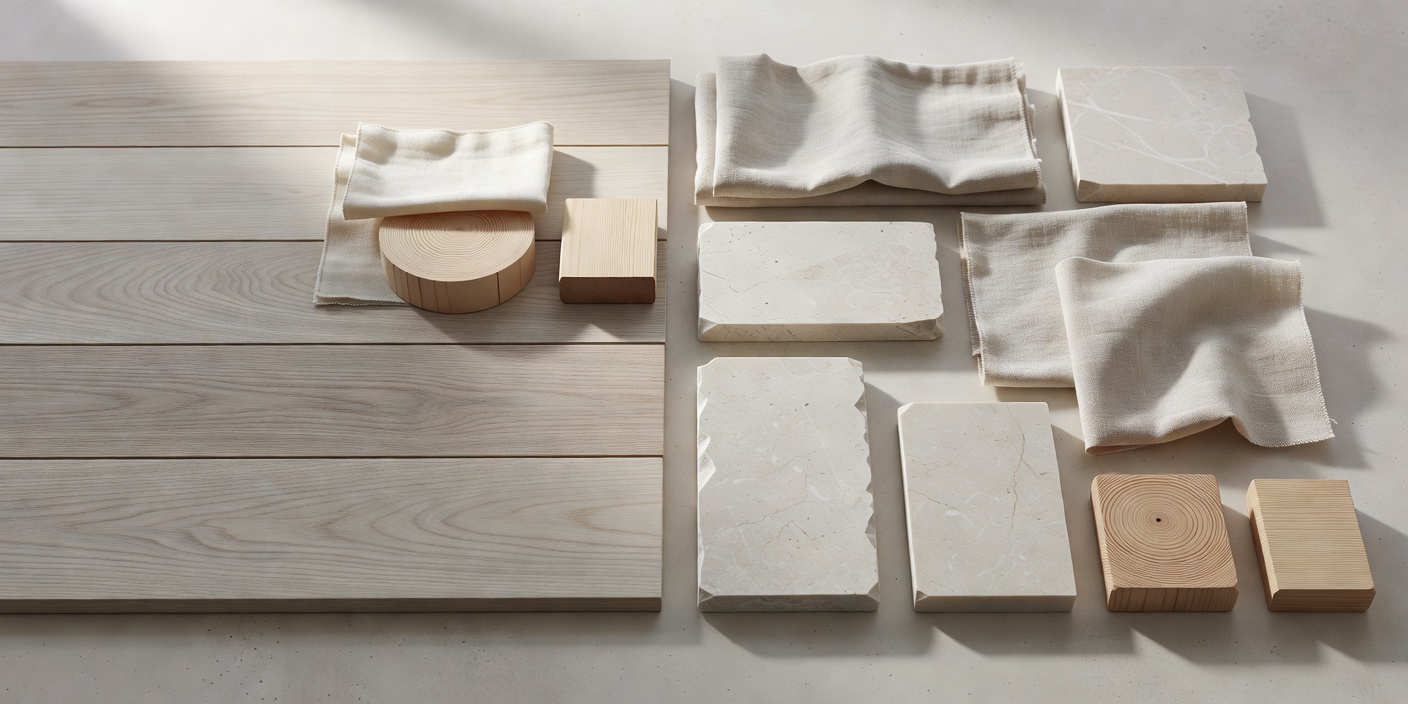
Why Soap-Finish Outlasts Plastic Lacquer
Polyurethane lacquers trap timber beneath a synthetic film. Over time, that plastic layer scratches, turns amber, and cannot be spot-repaired without stripping the entire floor. In contrast, Scandinavian lye and white soap treatment is a living finish.
The lye stops the wood from oxidizing and yellowing when exposed to sun. Periodic washings with pure coconut or vegetable oil-based soap flakes penetrate deep into the timber grain. The soap fats harden inside the cellular structure, naturally repelling stains while leaving the wood silky, matte, and cool underfoot.
Scots Pine & European Ash
Slow-growth Nordic conifers develop dense ring structures, providing natural resistance against warping and dimensional shifts during indoor heating seasons.
Vegetable-Tanned Saddle Hide
Tanned with organic tree bark extracts rather than toxic chromium salts. It transitions gracefully from pale nude to deep honey over fifteen years of contact.
Gotland & Öland Limestone
Mined along the Baltic coast, these stones exhibit natural fossil markings, low water absorption, and exceptional thermal retention for underfloor heating slabs.
Nordic Surface Maintenance Protocol
Timber Wash Ritual
Bi-Monthly CareMop floors using two buckets: one containing white soap solution (1:20 ratio), and one with clean rinsing water. Never saturate the boards with excess moisture.
Stone Nourishment
Quarterly SealClean natural stone exclusively with neutral pH soap. Avoid acidic cleaners such as vinegar or citrus sprays, which etch delicate calcium-carbonate structures.
Textile Airing
Winter TraditionFollowing Swedish winter customs, wool rugs are laid face down in fresh sub-zero snow. The dry frozen crystals bind to dust and revive wool lanolin fibers without chemical dampness.