Lighting: Daylight to Lamplight
In northern latitudes, light is the most precious architectural material. Rather than blinding a room with one harsh central fixture, Nordic homes use localized warm pools of light.
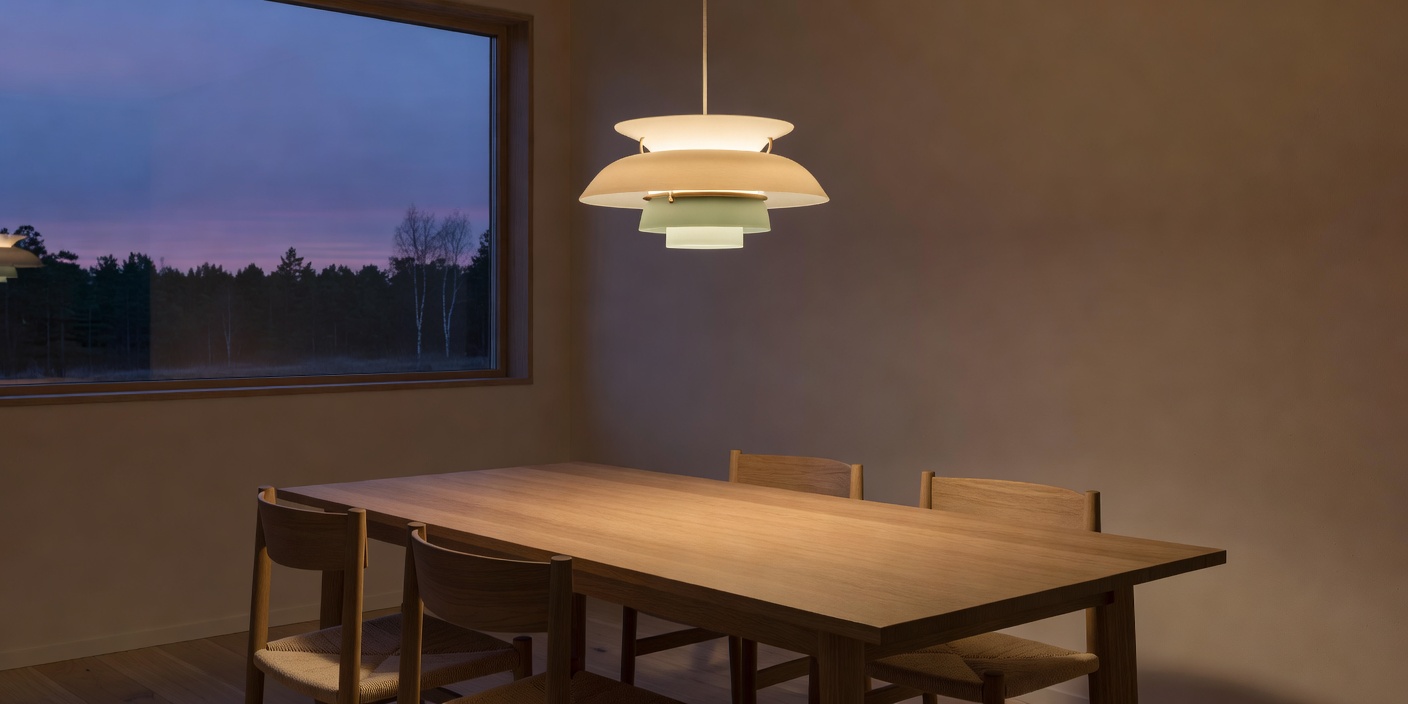
The Poul Henningsen Legacy: Eradicating Glare
In the 1920s, Danish lighting designer Poul Henningsen noticed how the newly invented electric lightbulb blinded diners and created sharp, aggressive shadows. His response was a logarithmic spiral of shades that shielded the filament completely.
The inside surfaces of Nordic shades are often treated with warm red, amber, or matte white finishes to correct the stark blue spectrum of early evening dusk, restoring psychological calmness (hygge and trevnad) to domestic life.
The 5-Point Nordic Illumination Model
Instead of relying on single overhead lights, distribute five distinct lighting points across any medium-sized room:
Low Window Sill Lamp
Perimeter WelcomingPlaced directly on the window sill (or a nearby low stool), a dim 2200K lamp creates an optical bridge between dark winter night outside and the warm interior room.
Focused Table Anchor
Low-Hung Dining PendantSuspended precisely 60cm to 65cm above the tabletop. It defines an intimate luminous circle where faces and dishes are illuminated without blinding seated guests.
Reading Task Light
Articulated DirectionPositioned behind or beside reading chairs. Equipped with an opaque shade to channel light downward onto books without spilling glare into the room.
Wall Grazing Accent
Tactile Vertical DepthDirected upward or downward against raw timber or textured plaster walls. This highlights architectural surface texture and makes walls visually recede.
Low Credenza Beacon
Soft In-Between GlowAn opal glass globe or paper lantern set at waist height. It provides a gentle background beacon when relaxing in the evening with minimal lighting.